Madeira, the island where light has a voice of its own
You have to learn to look slowly, to distinguish the shades of green, the shimmer of moisture in the air, the gold of the sea when the sun sinks behind the cliffs. You come looking for a postcard, and you end up staying for a light that shifts every hour and seems to bend time itself.
Madeira is located 965 kilometers from Lisbon, Portugal, and only 700 from the African coast, in the middle of the Atlantic. This in-between location—between Europe and Africa, between the temperate north and the tropical south—gives it a mild climate year-round: winters rarely dip below 17°C and summers hover around 25°C. But what really defines the island is not the thermometer, but its clarity.
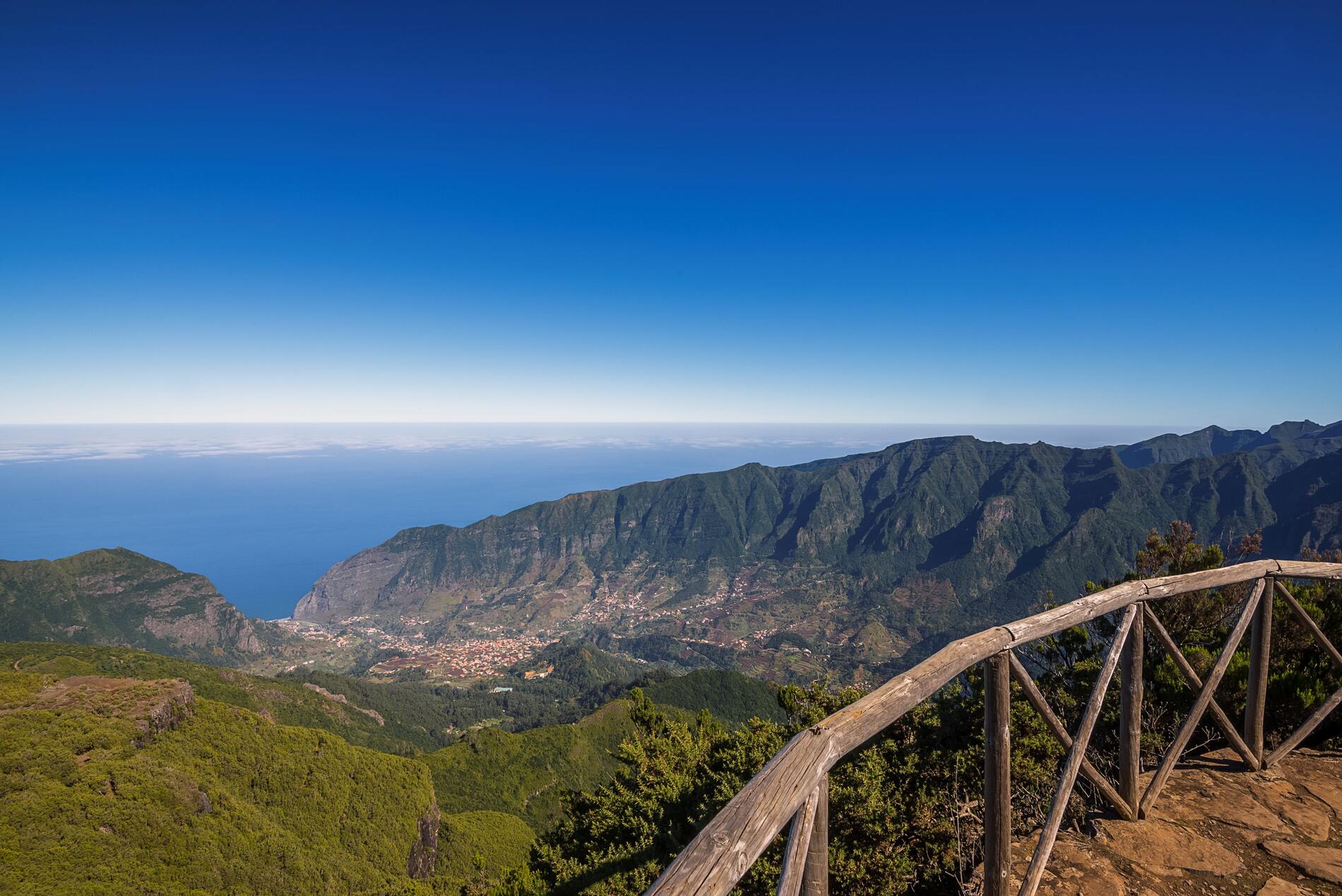
Geographers describe it as a dramatic volcanic block: a central massif where peaks exceed 1,800 meters and plunge steeply to the sea. This dramatic terrain makes the light multiply. At dawn, the views from Bica da Cana over the sea of clouds are breathtaking. At midday, the basalt walls light up with silvery reflections. And as evening falls, the western coast is tinged with liquid gold, as if the island is dissolving into the Atlantic on the rugged shore of the village of Ponta do Sol.
Shade and humidity: the laurel forest
The green heart of Madeira—the Laurisilva, declared a UNESCO World Heritage Site in 1999—covers about 20% of the island. It is the largest surviving subtropical laurel forest on the planet, a remnant of the forests that covered Europe in the Tertiary.
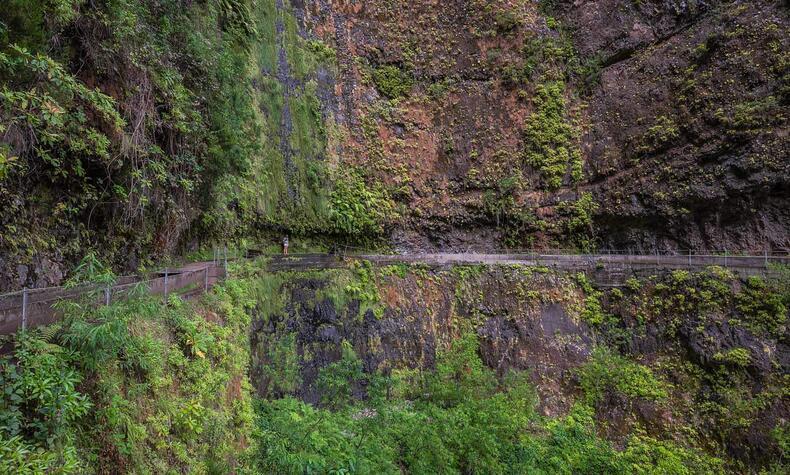
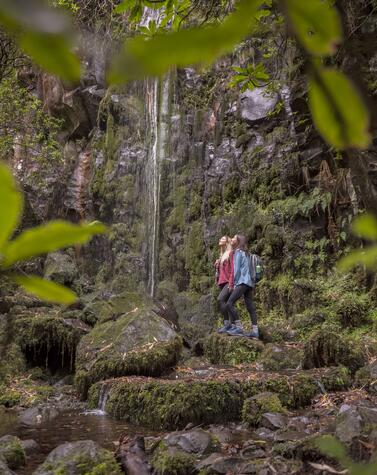
To walk along one of its levadas—the irrigation canals cut since the 16th century to carry water from north to south—is to follow the course of light. The paths wind through laurels, heather, giant ferns, and moisture-absorbing lichens. Of the more than 2,100 kilometers of levadas, the most celebrated is the Levada do Caldeirão Verde, in the Queimadas Natural Park, where sunlight barely filters through the fog. Also worth seeking out: the Levada dos Cedros—one of the oldest, built in the 17th century—and the Levada da Fajã do Rodrigues, which passes through several tunnels. Others, such as the Levada das 25 Fontes, offer a constant play of chiaroscuro: rays of sunlight illuminating ephemeral waterfalls and moss-covered stone arches.
Fajãs and salt-kissed vines
Madeira is an island carved by the sea. On its north coast, the ocean hits hard; on the south, it caresses it. From this contrast the fajãs were born—small strips of fertile land at the foot of the cliffs, where light and water find their balance. The most famous is the Fajã dos Padres, a microclimate suspended between sea and mountain, accessible by a cable car that descends almost 300 meters. There, a handful of houses, vineyards, and fruit trees recall the agricultural Madeira of a century ago. The name comes from the Jesuits who farmed this land in the 17th century; it is said that the first Malvasia wines were fermented here and then exported to England and the American colonies.
The winemaking tradition is still alive. In São Vicente and Seixal, wineries such as Quinta do Barbusano organize tastings among terraced vineyards, where the sun bounces off the volcanic slopes and the wine takes on saline notes. And at the Instituto do Vinho, do Bordado e do Artesanato da Madeira (IVBAM), in Funchal, you can follow the history of wine.
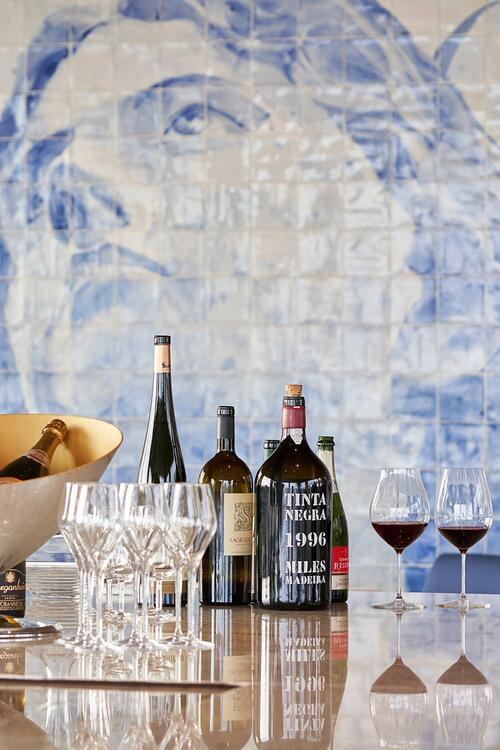
The wine that toasted independence In the 18th century Madeira wine was already a transatlantic phenomenon. Born of maritime trade and chance, its fame grew thanks to the heat of ships' holds. The barrels traveling to the British colonies or America endured weeks of pitching and tropical sun, and upon arrival, the wine had changed: darker, more complex, longer-lived. They called this process vinho da roda, the wine that "turns around."
Among the ports that welcomed it enthusiastically were Charleston, Boston, and Philadelphia, where Madeira wine became a symbol of colonial refinement. In 1776, when the signers of the Declaration of Independence raised their glasses to toast the new nation, they did so precisely with Madeira wine. It was the only European wine that withstood the long voyages and hot climate of the American coast without spoiling.
For decades, the island’s wineries—Blandy’s, Leacock, Henriques & Henriques—supplied the young republic. It is said that George Washington, Thomas Jefferson and Benjamin Franklin considered it a necessary luxury: the taste of Europe with the stamina of the New World.
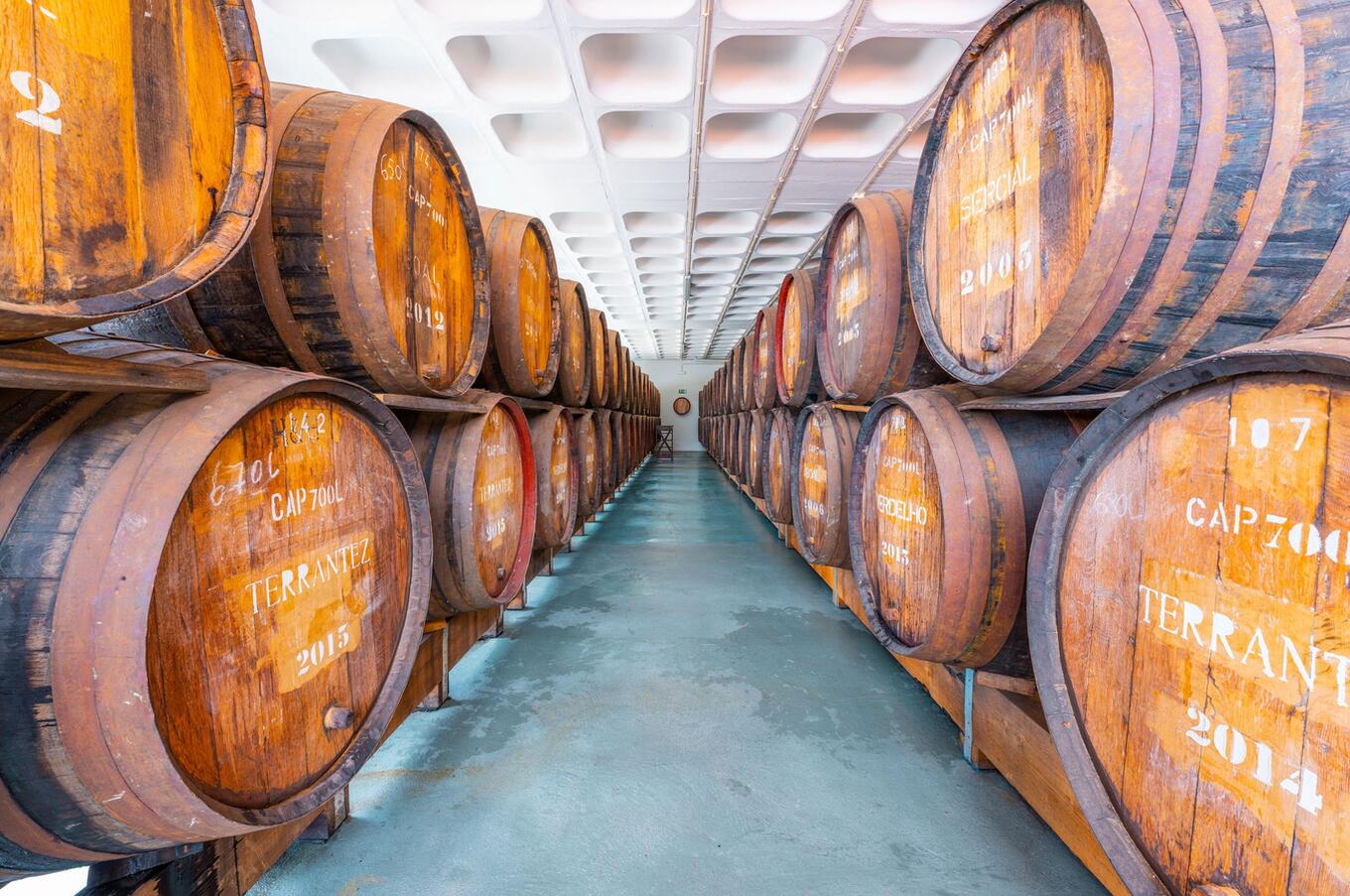
Even today, Madeira wine retains that character: sweet or dry, made from grapes such as Sercial, Verdelho, Bual or Malvasia, it ages slowly under controlled heat, mimicking the journey that made it famous. Each glass carries an echo of history: that of the only wine that crossed the ocean, reinvented itself and ended up celebrating an independence
The sea and its theater
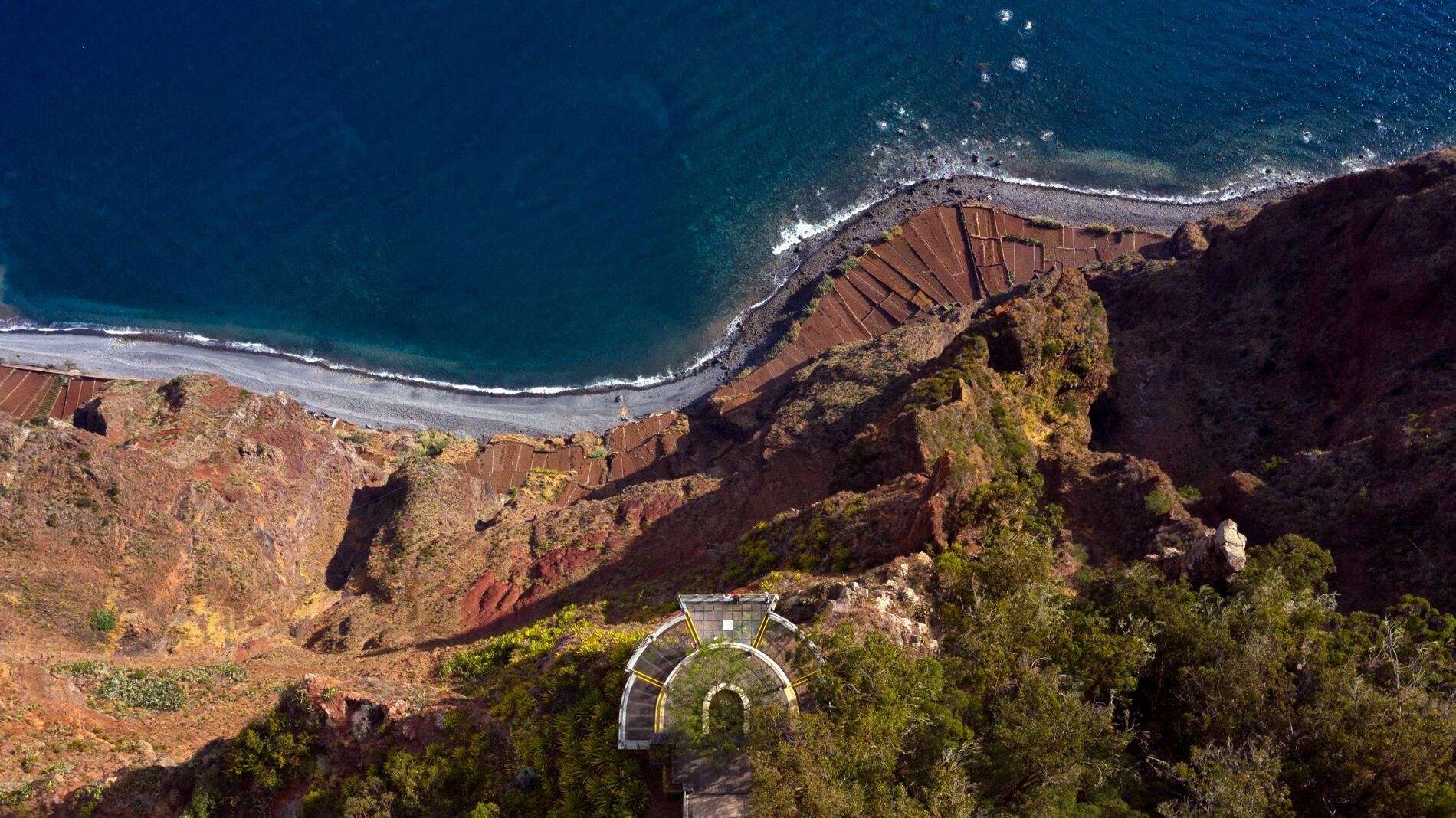
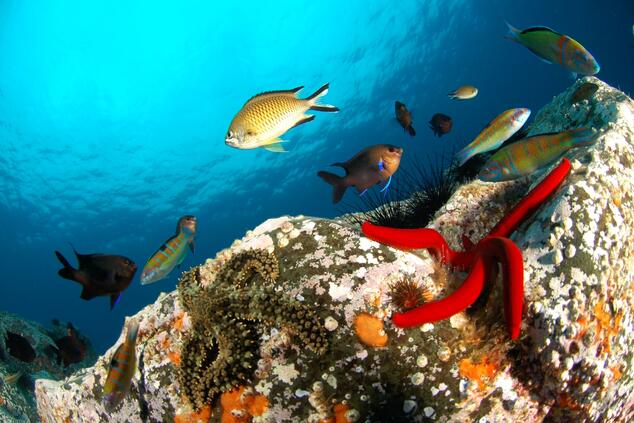
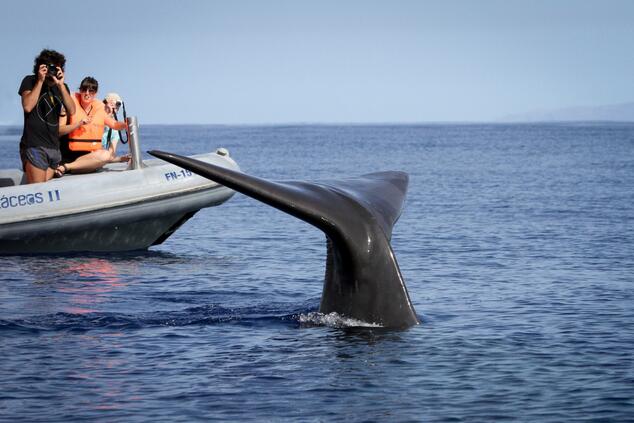
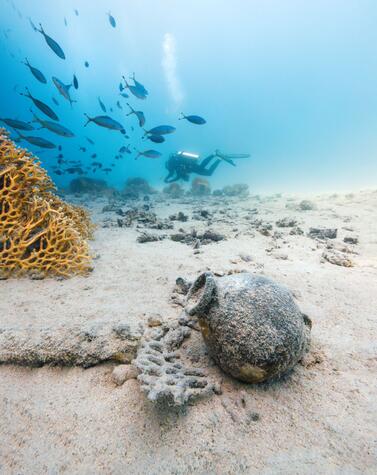
Madeira lives facing the sea. There is no place where its breath is not heard. Boats departing from the port of Funchal offer excursions to spot dolphins and sperm whales; other excursions venture along the cliffs of Cabo Girão, where the rock drops 580 meters to the ocean. Below the surface, divers explore wrecks like the corveta Afonso Cerqueira, scuttled in 2018 to create an artificial reef. Thirty meters deep, the light still penetrates clearly, tinting the coral-covered ironwork blue.
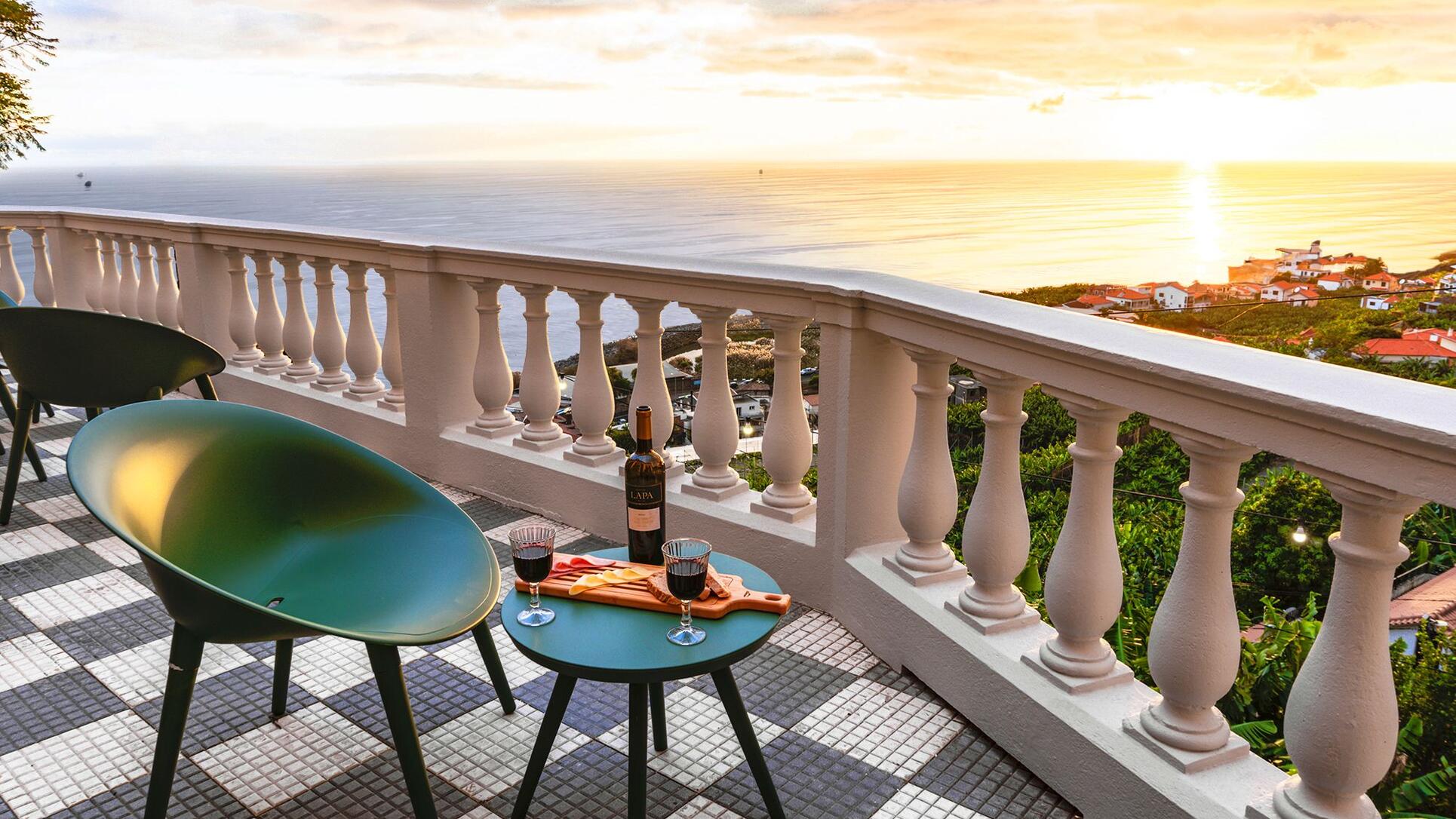
Beyond active tourism, there is a more contemplative dimension: going out on a sailboat at sunset, when the city lights up behind and the sea becomes a mirror. In the winter months, the sun sets earlier, but the light is purer. To raise a glass on deck while the sky turns copper is one of those pleasures that explain why time in Madeira seems to stretch.
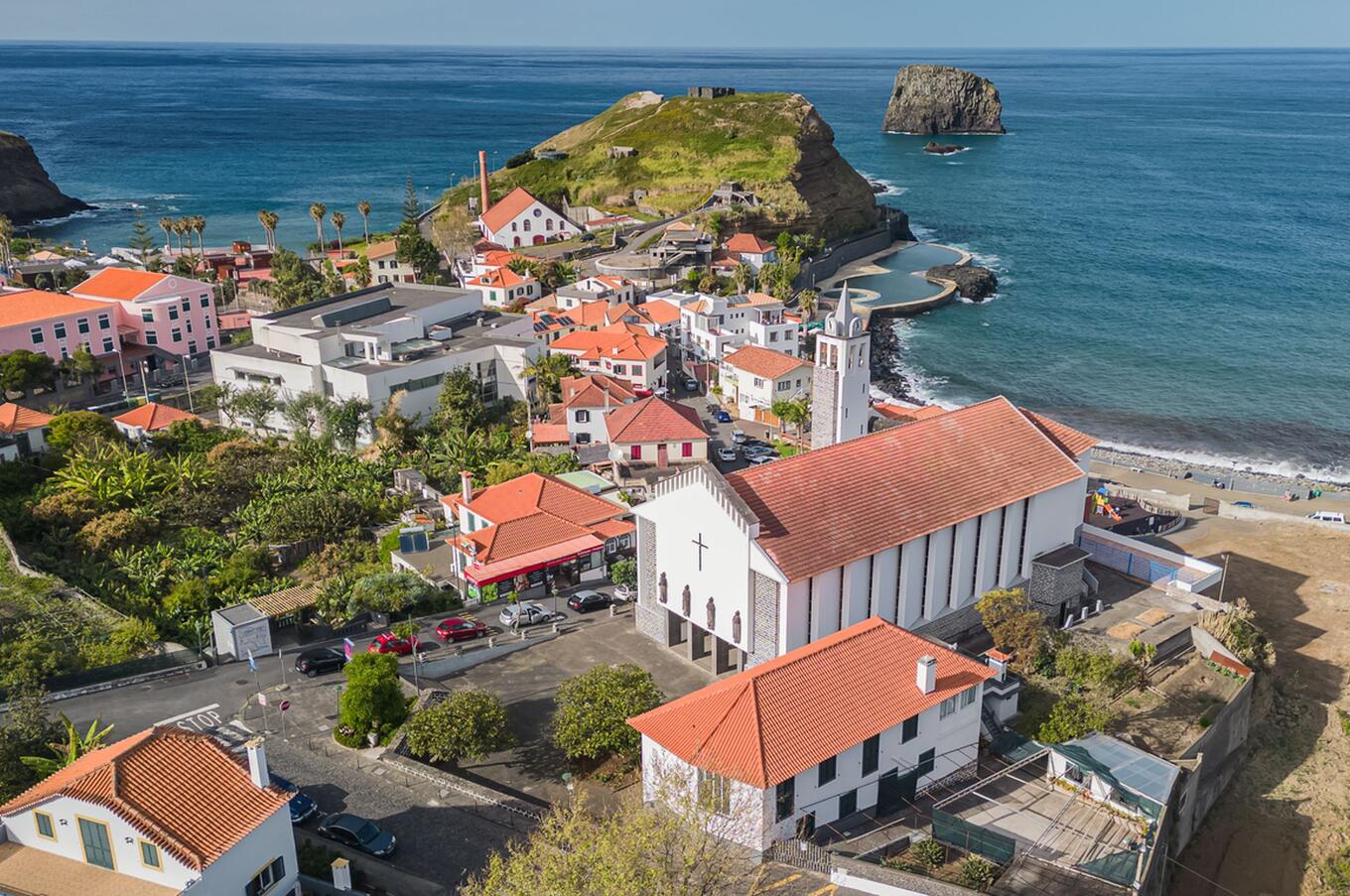
Anchoring off Ponta do Sol, cracking open a bottle, and watching the coast ignite—that is one of those luxuries that cannot be planned. In the west of the island, Ponta do Sol lives up to its name: it's Madeira's brightest corner, an amphitheater of white houses sloping down to the sea amid banana trees and golden cliffs in the afternoon.
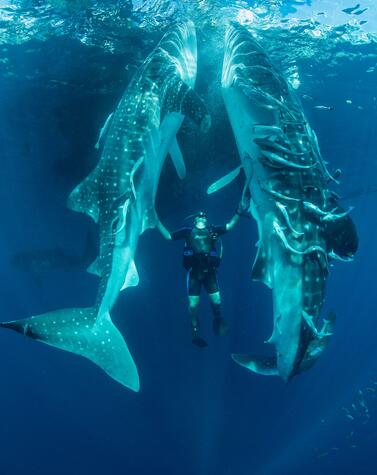
- Diving in Madeira, something unexpected. Photo: Pedro Vasconcelos. —
- A close-up whale sighting. Photo: Miguel Moniz. —
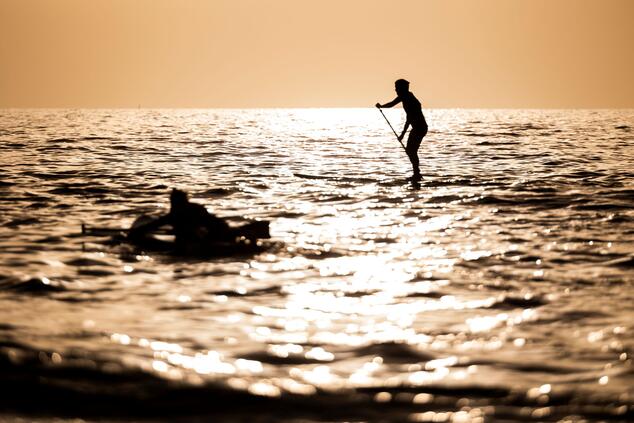
- Calm sea for paddle surfing. Photo: André Ferreira. —
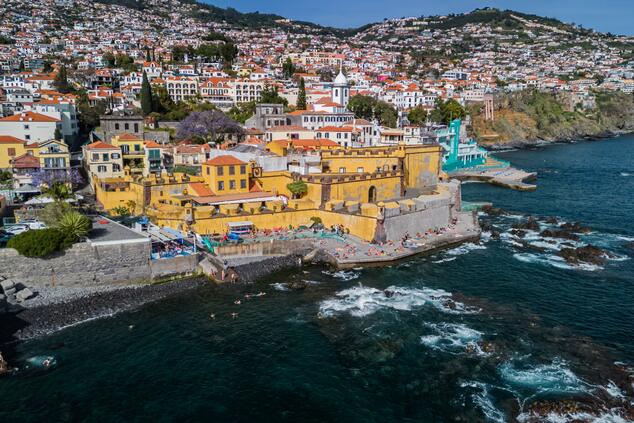
- Fort of Sao Tiago. Photo: Francisco Correia.
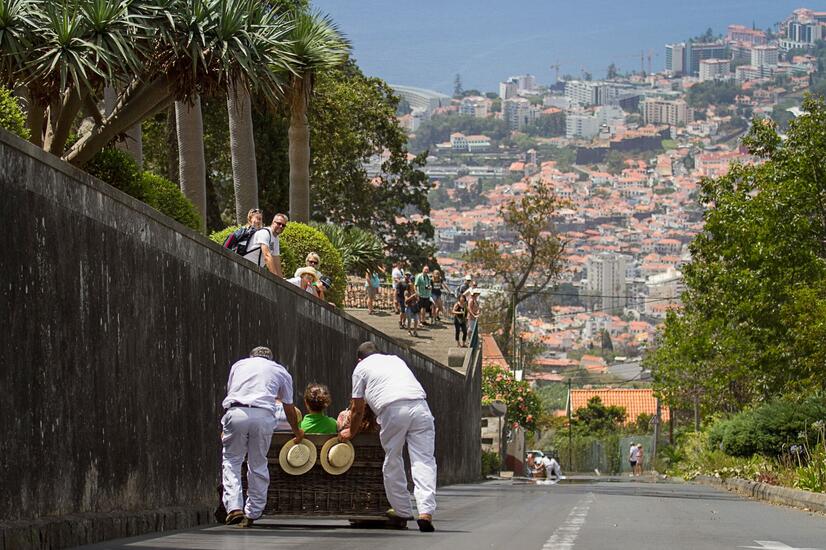
The cesteiros hand-weave the famous basket sleds from willow branches and eucalyptus wood."292" data-end="350">Cesteiros and carreiros: the tradition that slides
On the steep streets of Monte, above Funchal, one of Madeira's most unique trades is preserved. The cesteiros hand weave the famous basket carts from willow branches and eucalyptus wood; the carreiros drive them, dressed in white and wearing straw hats, guiding travelers on a dizzying two-kilometer descent into town.
The origin of this tradition dates back to the mid-19th century, when Monte's residents began using baskets mounted on wooden skids to transport goods downhill. Over time, that improvised means of transport became an attraction that unites craftsmanship and skill.
Each sled—made entirely by hand and built to last a decade—is the product of the cesteiros’ patience and the carreiros’ skill. Together, they keep alive a tradition that has not only survived the tourist age, but continues to embody the practical, poetic soul of Madeira: the art of turning a steep hillside into a ride.
When light becomes habit
The Madeirans live looking at the sea, but they never rush the looking. They have learned to read the signs of weather, fishing, and the seasons in the quality of the light. In the cafes along the promenade of Câmara de Lobos, fishermen chat as they mend colorful nets drying in the sun. It was here that Winston Churchill painted watercolors during his stay in 1950. That light, changing and enveloping, remains the island's common thread. It unites the forest and the sea, the mountain and the city, daily life and travel. It is a lesson in perspective: it teaches that luxury doesn’t always dazzle—sometimes it simply filters through
Churchill and the light of Madeira
In 1950, Winston Churchill came to Madeira for rest and sea air. He stayed at Reid's Palace, invited by the Portuguese government, and made the island his winter retreat.He set up his easel in the harbor of Câmara de Lobos, a small fishing village west of Funchal, and spent hours painting the colorful boats and the reflection of the sun on the water.
His visit attracted photographers and onlookers, but Churchill seemed oblivious to it all. He said that in Madeira "the light is English in the morning and African in the afternoon." That stay of just two weeks cemented the myth of Reid's as a retreat for statesmen and artists, and left an image that still endures: the British prime minister, Panama hat, brush in hand, trying to capture in oil a light that couldn’t be copied